Science
Shilajit and energy: what the science says
Muscle fatigue, mitochondria, fulvic acid… We review the available clinical studies, with their strengths and limitations.
By the Valterra team · 8 October 2026 · 7 min read
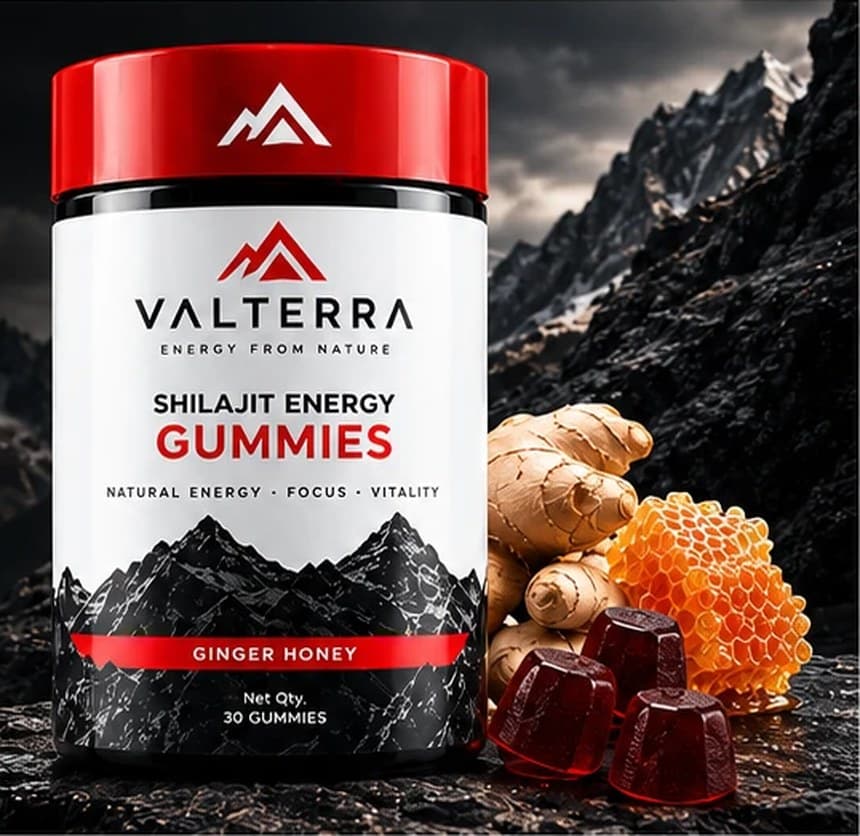
Shilajit is often described as a "natural energy booster". But what does the scientific literature actually say? Here's an honest overview.
Cellular energy: the mitochondria lead
Our cells produce energy as ATP, mainly in the mitochondria. Preclinical work suggests that Shilajit's dibenzo-alpha-pyrones and fulvic acid may support mitochondrial function. These results come mostly from animal studies and need to be confirmed in humans.
Muscle fatigue
A randomised, double-blind study published in 2019 in the Journal of the International Society of Sports Nutrition (Keller et al.) followed 63 active men for 8 weeks. Participants taking 500 mg/day of purified Shilajit retained their muscle strength better after a fatiguing protocol than the placebo group.
Vitality in men
A 2016 clinical study published in Andrologia (Pandit et al.) observed a significant increase in total testosterone versus placebo in men aged 45 to 55 taking 250 mg of purified Shilajit twice a day for 90 days.
Cognitive function
A review published in 2012 in the International Journal of Alzheimer's Disease (Carrasco-Gallardo et al.) explored the potential of fulvic acid on certain mechanisms linked to brain ageing. It's a research lead, not proof of efficacy.
Limitations to know
- Human clinical studies remain few and small;
- They use standardised extracts at specific doses, not every product on the market;
- The effects observed relate to the ingredient alone, not a complete formula.
Our approach
At Valterra, we prefer transparency to promises. We combine Shilajit with ashwagandha, ginger and honey — ingredients that have been studied in their own right — and we publish our sources on the Science page.
This article is for information only and does not replace the advice of a healthcare professional. Food supplements are not medicines and are not intended to diagnose, treat, cure or prevent any disease.
Keep reading
 Ingredients
1 October 2026 · 6 min read
What is Shilajit? Origins, composition and uses
A mineral resin born in the rocks of the Himalayas, Shilajit has been used for more than 3,000 years. Here's what it really contains.
 Ingredients
24 September 2026 · 5 min read
Ashwagandha: the adaptogen that helps you manage stress
A star of Ayurveda, ashwagandha is one of the best-studied adaptogens. How does it work, and why pair it with Shilajit?
 Ingredients
15 September 2026 · 4 min read
Ginger and honey: an ancestral duo
More than a flavour: ginger and honey have been used together for centuries. Why did we choose them?